

What Does a DEXA Scan Tell You About Your Health?
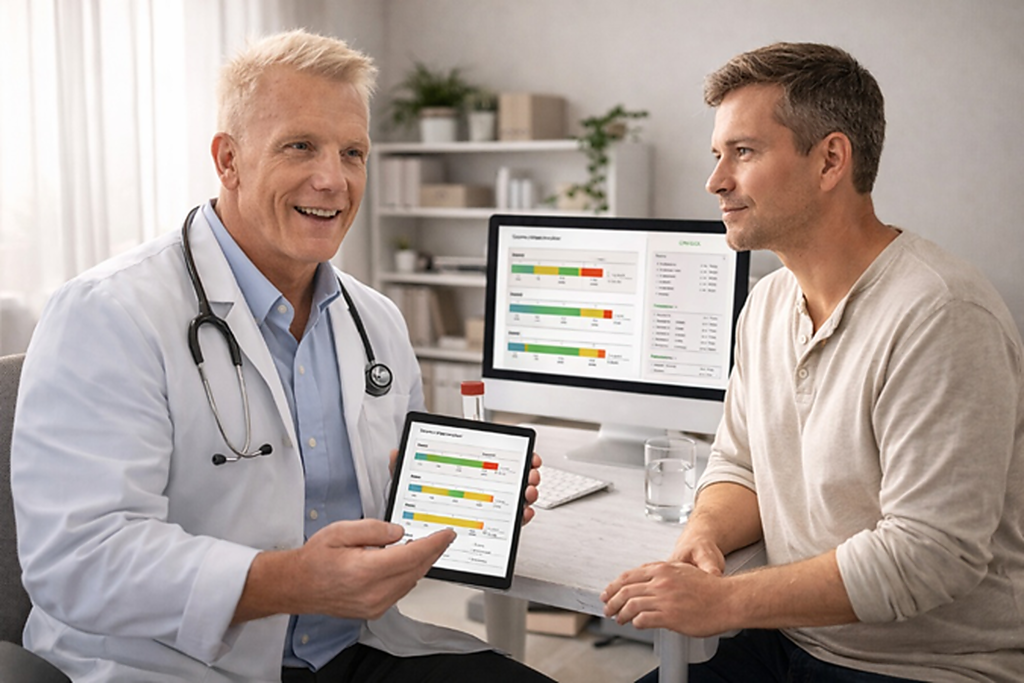
Ever wondered what the bathroom scale isn’t telling you? A DEXA scan looks beyond your weight to provide information about bone density, body fat, and lean tissue. Depending on the type of scan, it can help you understand your bone health or see how fat and lean tissue are distributed throughout your body. These insights can support more informed decisions about your long-term well-being.
At HealthSpan Maximized, clients are referred for a DEXA scan. Dr. Stenstrom then interprets the results and builds them into a personalized plan of action.
DEXA Scan Basics: What You Need to Know
A DEXA scan, short for dual-energy X-ray absorptiometry, uses low-dose X-rays to measure bone mineral density. A DEXA body composition scan can also estimate body fat and lean tissue, providing more detailed information than a regular weighing scale.
The type of scan determines what information you receive. A bone density scan helps assess bone health, while a body composition scan estimates fat and lean tissue in different areas of the body. Results should be interpreted alongside your medical history and other relevant health information.
What Can a DEXA Scan Tell You About Bone Health?
A DEXA scan measures bone mineral density and can help identify low bone density and assess fracture risk. It provides useful information about your bones, but the results are only one part of a broader assessment of bone health.
Bone Density
Bone mineral density indicates how much mineral is present in your bones. Lower bone density can increase fracture risk and may develop without noticeable symptoms. A DEXA scan can help identify osteopenia or osteoporosis and support decisions about whether further assessment or care is needed.
Bone Strength and Fracture Risk
A DEXA scan does not directly measure bone strength or predict every fracture. However, its results can help healthcare professionals assess fracture risk alongside other factors, including age, medical history, previous fractures, family history, and certain medications.
Your healthcare provider can use this information to discuss suitable next steps, which may include exercise, nutrition changes, further assessment, or treatment.
Understanding Your DEXA Results
Your DEXA report may include a T-score and a Z-score. A T-score compares your bone density with that of a healthy young adult, while a Z-score compares it with the expected range for people of a similar age and sex.
These scores help healthcare professionals interpret bone density, but their meaning depends on your age and clinical circumstances. For more information, see Osteoporosis Canada’s guide to bone mineral density testing.
Osteopenia and Osteoporosis: What Is the Difference?
Osteopenia refers to bone density that is lower than the expected normal range but does not meet the usual threshold for osteoporosis. Osteoporosis involves more significant bone loss and is associated with a higher risk of fractures.
Both conditions can develop without clear symptoms. Understanding your results can help you and your healthcare provider determine whether further evaluation or a care plan is appropriate.
Factors That Can Affect Bone Health
Several factors can affect bone health, including aging, hormonal changes, family history, low calcium or vitamin D intake, physical inactivity, smoking, certain medical conditions, and some medications. Identifying the factors that apply to you can help your healthcare provider recommend practical ways to support your bones.
Can a DEXA Scan Help Monitor Bone Health?
When follow-up scans are recommended, comparing results can help healthcare professionals monitor changes in bone density and review your care plan when necessary. However, a DEXA scan does not identify every cause of bone loss or predict every fracture. Results should be considered alongside your health history, symptoms, medications, and other risk factors.
The timing of another scan depends on your individual circumstances and your healthcare provider’s recommendations. Comparisons should also account for the equipment used and normal measurement variation.
How Can You Support Your Bone Health?
Weight-bearing activity, strength exercises, adequate calcium and vitamin D, and avoiding smoking can help support healthy bones. Your individual needs may vary according to your age, diet, medical history, and bone density.
If a scan indicates low bone density, speak with your healthcare provider about the options that best suit your circumstances. The National Institute on Aging’s osteoporosis guidance provides additional information about bone loss, risk factors, and care.
What Can a DEXA Scan Tell You About Your Body Composition?
Body weight alone does not show how much of your weight comes from fat or lean tissue. A DEXA body composition scan estimates these components and shows how they are distributed across different areas of your body.
Body Fat Percentage
A DEXA body composition scan estimates the percentage of your body weight that comes from fat. Body fat plays important roles in energy storage and normal body functions, but the amount and distribution of fat can also be relevant to health.
Tracking estimated body fat over time may help you understand how your body responds to changes in nutrition, exercise, and daily habits. These measurements are most useful when considered alongside other health information rather than as a standalone measure of health.
Fat Distribution
Body fat is stored in different areas of the body. A DEXA scan can estimate fat distribution across areas such as the arms, legs, and trunk, providing more detail about regional differences in body composition.
However, a DEXA scan does not directly measure every type of fat around internal organs. Its findings should be interpreted within the context of your overall health.
Skeletal Muscle Mass
Skeletal muscles help you move, maintain strength, and perform everyday activities. A DEXA scan estimates lean tissue in different parts of the body, which can provide useful information about muscle mass. However, lean tissue includes more than muscle, and the scan does not measure muscle strength directly.
These estimates may help you track changes during strength training, aging, or a fitness program, particularly when results are compared over time under similar scanning conditions.
Fat Mass and Lean Mass
Fat mass refers to the portion of your body weight made up of fat. Lean mass includes muscle, organs, body water, and other non-fat tissues.
A DEXA body composition scan estimates these components to show how your body weight is distributed between fat and lean tissue. Understanding these measurements can help you assess changes in body composition without relying only on changes in total weight.
For a research overview of how DEXA is used to assess fat and lean tissue, see this review of DEXA body composition assessment.
What Is Fat-Free Mass Index (FFMI)?
Fat-Free Mass Index (FFMI) compares fat-free mass with height, providing another way to assess body composition while accounting for differences in body size.
FFMI is not a diagnosis of health or fitness. Its interpretation depends on factors such as age, sex, and individual circumstances, and it is most useful when considered alongside other measurements and professional guidance.
Understanding Regional Body Composition
A DEXA body composition report may provide estimates for different body regions, including the arms, legs, and trunk. Comparing these measurements can help you understand where fat and lean tissue are distributed.
This information may be useful when monitoring changes during a structured exercise or health plan. The results should be interpreted with awareness of the scan’s limitations.
Can a DEXA Scan Track Changes in Body Composition?
A DEXA scan can provide a baseline measurement that may be compared with later scans when follow-up testing is appropriate. These comparisons can help show whether estimated fat mass and lean mass have changed.
Hydration, recent food intake, and differences in scanning conditions may influence measurements. Following the scanning provider’s preparation instructions and keeping conditions as consistent as possible can make comparisons more useful.
Why Does Body Composition Matter for Your Health?
Two people can have the same body weight but different proportions of fat and lean tissue. Body composition provides more detail about these differences and can help you understand changes that a scale alone may not reveal.
This information may help guide decisions about strength training, nutrition, and other health habits. Rather than focusing exclusively on a target weight, you can consider changes in body composition alongside your overall health, strength, and personal goals.
How Can a DEXA Scan Support Long-Term Health?
A DEXA scan provides a snapshot of bone density or body composition, depending on the type of scan performed. When follow-up scans are appropriate, comparing results can help you understand changes over time and assess how your body is responding to a health or fitness plan.
The results do not provide a complete picture of your health on their own. When interpreted alongside your medical history and other relevant information, they can help inform practical next steps and a personalized approach to your health goals.
What to Know Before Getting a DEXA Scan
Before arranging a DEXA scan, consider what you want to learn from it. A bone density scan and a DEXA body composition scan provide different information, so choosing the appropriate type is important. Costs can vary depending on the scan type, the clinic, and the services included.
HealthSpan Maximized can refer clients for the right scan type based on their needs. Dr. Stenstrom then interprets the results and incorporates relevant findings into a personalized plan of action.
FAQs
What does a DEXA scan measure?
A DEXA scan measures bone mineral density. A body composition scan can also estimate body fat and lean tissue, providing information beyond total body weight.
Can a DEXA scan show body fat and muscle mass?
A DEXA body composition scan estimates body fat and lean tissue, including regional estimates that can help assess body composition. Lean tissue is not the same as muscle alone, and the scan does not directly measure muscle strength.
Does a DEXA scan show bone density?
Yes. A bone density DEXA scan measures bone mineral density and can help identify low bone density, including osteopenia and osteoporosis. The results can also contribute to an assessment of fracture risk.
What does a DEXA scan tell you about your health?
Depending on the type of scan, it can provide information about bone density, body fat distribution, and lean tissue. These findings can help you and your healthcare provider understand aspects of your health when considered alongside other relevant information.
How often should you get a DEXA scan?
The recommended timing depends on your health needs, medical history, reason for testing, and previous results. A healthcare professional can advise whether follow-up testing is appropriate and when it may be useful.
Discover What Your Body Is Telling You
A DEXA scan can provide valuable information about bone density and body composition, helping you look beyond the number on the scale. When the right scan is selected and the results are interpreted in context, the findings can support more informed decisions about your health.
Ask HealthSpan Maximized about a DEXA referral and a plan built around your results.
Leave a comment